In the world of Wi-Fi, choosing between 5GHz and 2.4GHz can feel like picking a favorite child. Sure, 5GHz is the speedy sprinter, perfect for streaming and gaming, but 2.4GHz is the reliable old friend that reaches every corner of your home. If your iPhone’s been acting like a teenager avoiding chores, it might just need a little nudge to switch to the trusty 2.4GHz band.
Understanding Wi-Fi Frequencies
Wi-Fi operates on two main frequencies: 5GHz and 2.4GHz. Each band offers distinct advantages and disadvantages, influencing connectivity based on user needs.
Difference Between 5GHz and 2.4GHz
5GHz provides faster speeds, making it suitable for bandwidth-intensive activities like video streaming or online gaming. In contrast, 2.4GHz offers broader coverage, especially in larger spaces or areas with obstacles. Devices connecting to 5GHz often experience lower latency, while those on 2.4GHz may benefit from increased range but slower data rates. These differences influence device performance depending on the user’s environment.
Pros and Cons of Each Frequency
5GHz comes with benefits like higher speeds and reduced interference from neighboring networks due to its shorter wavelength. Users often find it ideal for high-demand applications. On the downside, 5GHz signals struggle to penetrate walls and other barriers, leading to reduced coverage. Conversely, 2.4GHz offers wider coverage areas, allowing devices to connect from greater distances. However, this frequency experiences more interference, as many devices, such as microwaves and Bluetooth gadgets, operate on the same band. Recognizing these pros and cons helps users make informed decisions about their Wi-Fi connections.
Steps to Change from 5GHz to 2.4GHz on iPhone
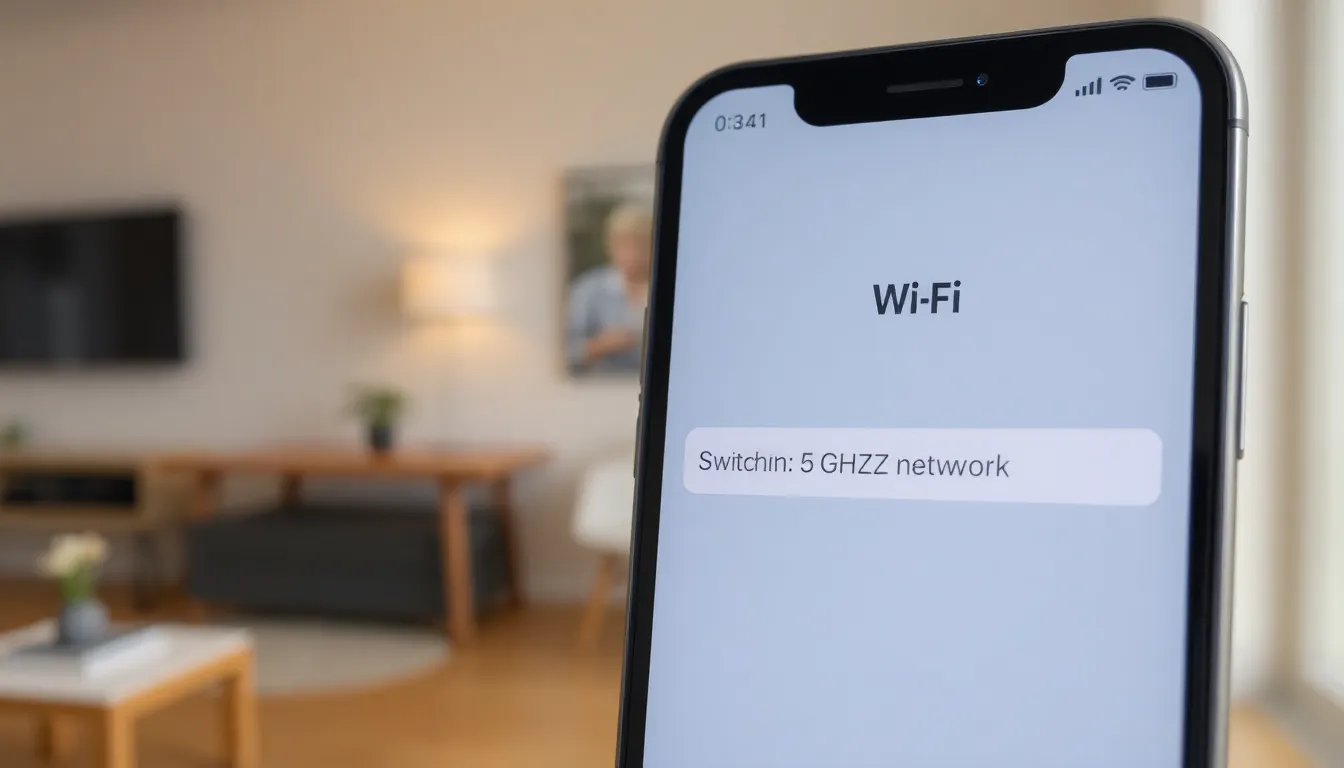
Changing from 5GHz to 2.4GHz on an iPhone involves a few straightforward steps. Each step ensures a smoother connection, especially if the user faces connectivity problems.
Checking Your Current Wi-Fi Connection
First, confirm the current Wi-Fi connection. Navigate to the Settings app, then tap Wi-Fi. The name of the currently connected network appears at the top. If the network displays a 5GHz signal, the user might want to switch to 2.4GHz for better coverage or to troubleshoot connectivity issues. Ensuring the desired network appears can help avoid confusion when making changes.
Accessing Wi-Fi Settings
Next, access the Wi-Fi settings. Tap the Settings icon on the iPhone home screen, then select Wi-Fi. A list of available networks displays along with the current one. It’s crucial to be near the router to see both 5GHz and 2.4GHz bands if they are available. This allows the user to easily switch to the preferred frequency.
Selecting the 2.4GHz Network
Finally, select the 2.4GHz network. Locate the network name that corresponds to the 2.4GHz band in the Wi-Fi settings. Simply tap the network name to connect. Enter the password if prompted. Once connected, the iPhone should experience improved coverage throughout the home, particularly in areas where the 5GHz signal is weak.
Troubleshooting Common Issues
Users might experience difficulties when switching between Wi-Fi bands. Addressing common problems can lead to a smoother connection.
Inability to Find 2.4GHz Network
Finding the 2.4GHz network can be challenging if the router settings block it. Ensure that the router broadcasts both bands simultaneously. Distance from the router influences visibility as well; staying closer helps in detecting the network. Interference from nearby devices also plays a role. Check for outdated firmware on the router as well. Updating the firmware may resolve connectivity issues. Lastly, consider restarting both the router and iPhone. A simple reboot can refresh network settings and reveal the hidden bands.
Connection Drops and Instability
Users often experience connection drops with the 2.4GHz band due to interference. Microwave ovens and cordless phones often disrupt signals. Devices further away from the router may also connect less reliably. If instability occurs, checking the router’s location can help. Placing the router in a central location often improves coverage. Additionally, changing the Wi-Fi channel through the router settings can mitigate interference from neighboring networks. Ensuring your iPhone’s software is updated can improve overall performance as well. Users should periodically check for these updates to maintain stable connections.
Benefits of Switching to 2.4GHz
Switching to 2.4GHz offers significant advantages for many users. Higher coverage and device compatibility often come into play when choosing Wi-Fi bands.
Better Range
Most environments benefit from the extended range provided by the 2.4GHz band. It penetrates walls and obstacles more effectively than the 5GHz band. In larger homes or areas with multiple floors, users frequently notice a stable connection even in remote corners. Signals from the 2.4GHz band can reach distances of up to 300 feet outdoors and 150 feet indoors under ideal conditions. This extended range makes it easier to connect devices that are farther from the router.
Compatibility with Older Devices
Most older devices rely on the 2.4GHz band for connectivity. Many smartphones, tablets, and smart home devices support this frequency due to its longer existence in the market. Users benefit from seamless access when connecting gadgets that may not support newer Wi-Fi standards. Legacy devices often maintain stable connections with the 2.4GHz band, ensuring that all devices in a home stay connected. Switching to this band allows space for a broader range of gadgets to connect without issues.
Switching from 5GHz to 2.4GHz on an iPhone can significantly enhance connectivity in areas where the 5GHz signal struggles. By understanding the unique advantages of each band users can make informed choices that suit their specific needs. The 2.4GHz band not only offers better coverage but also supports a wider range of devices.
Implementing the straightforward steps outlined ensures a smooth transition to the 2.4GHz network. With improved range and stability users can enjoy seamless internet access throughout their homes. Keeping routers updated and strategically placed further enhances performance, leading to a more reliable online experience. Embracing these adjustments can lead to a more satisfying and efficient use of Wi-Fi on an iPhone.